LILY-LIKE MONOCOTS
---
Order Liliales:
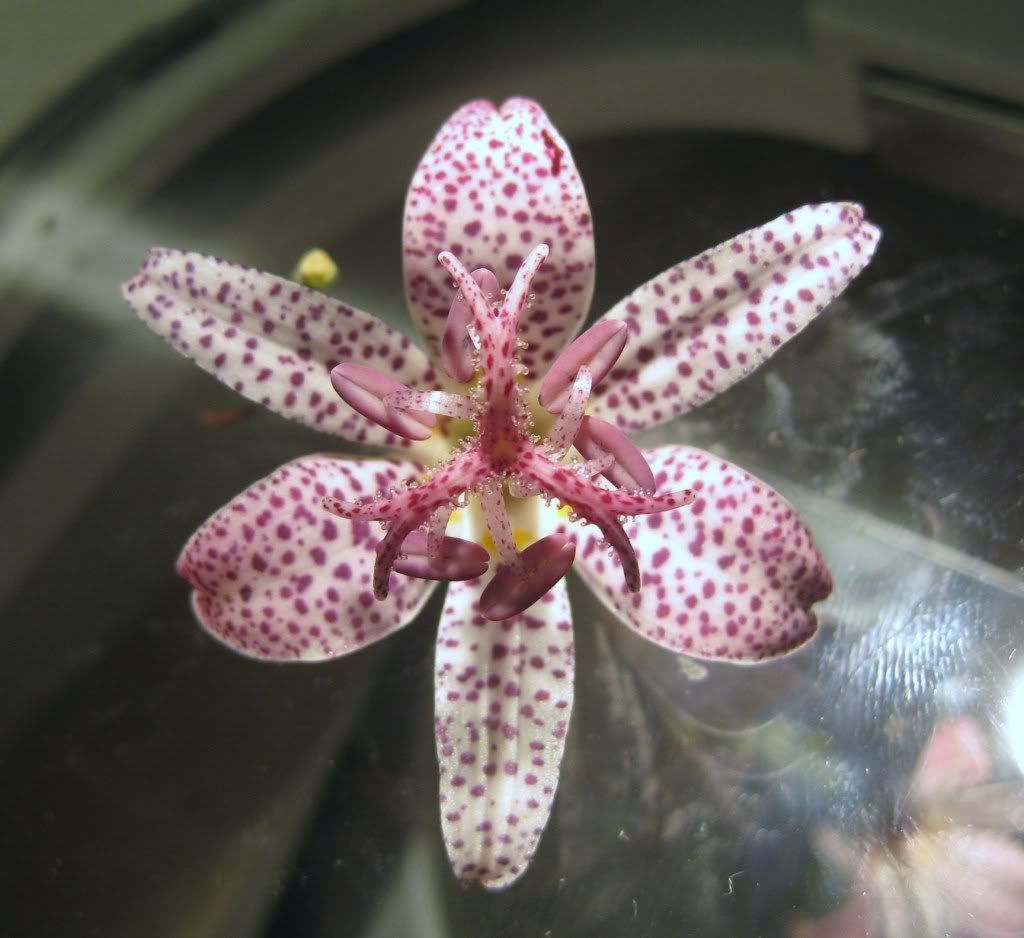
A flower of Tricyrtis sp. (toad lily). The flower has 2 whorls of tepals, and within each whorl are 3 tepals. This multiple of 3 floral structures are characteristic of the monocots.

A longitudinal section through the above flower. Note the superior ovary in the lily. The nectaries often look wet.
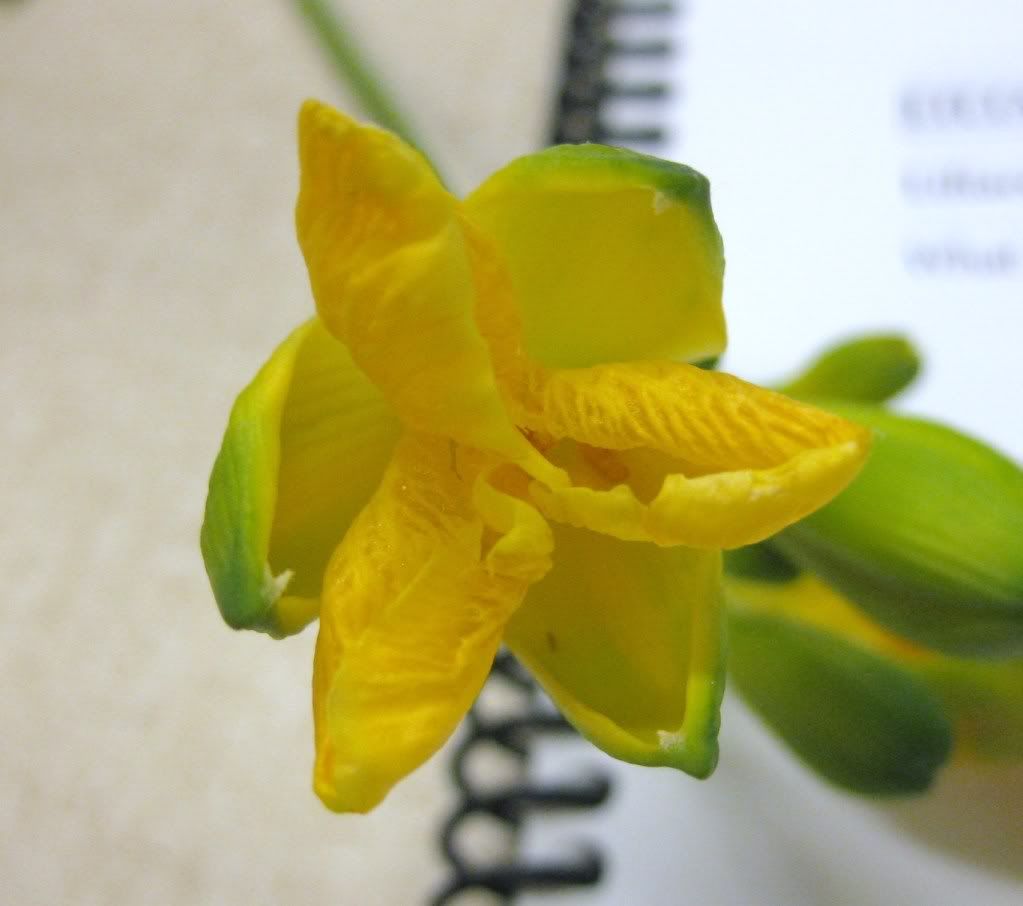
The floral organs in 3s are also evident in Lilium sp.

Some flat, winged seeds of Cardiocrinum sp.
Order Asparagales:
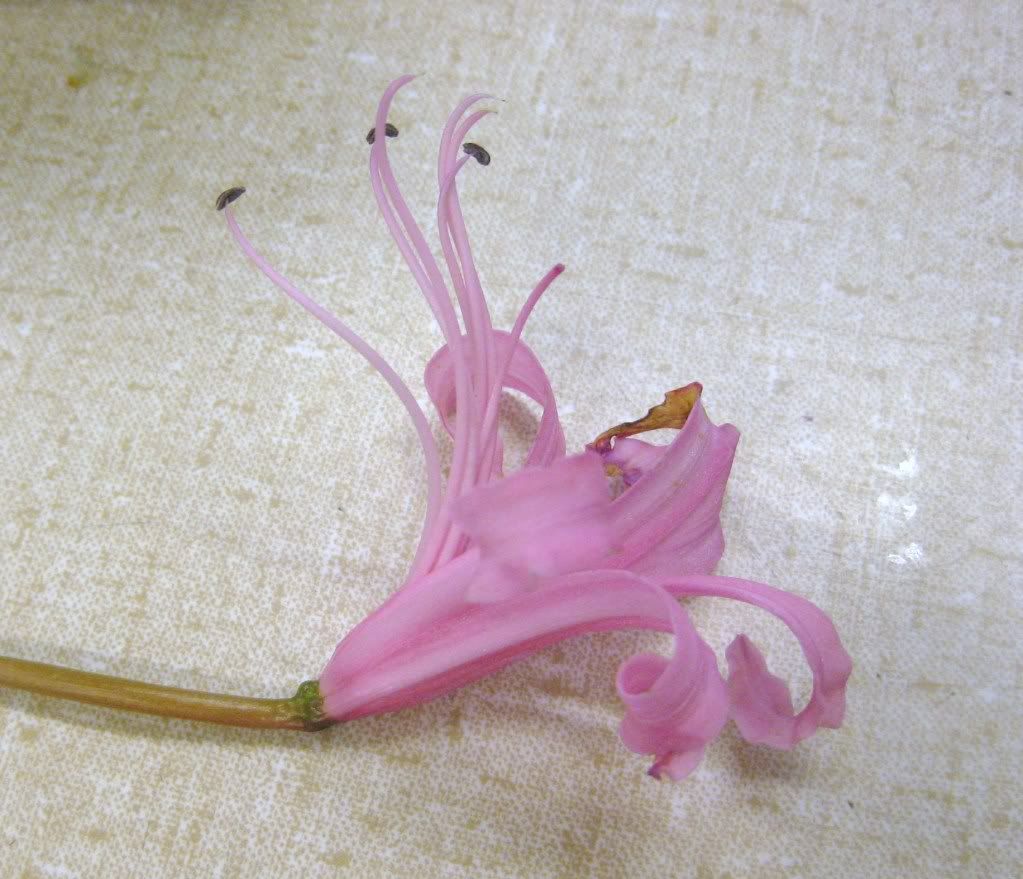
A Nerine sp. flower. The monocots have floral parts in multiples of 3s (eg. the above flower has 6 stamens).
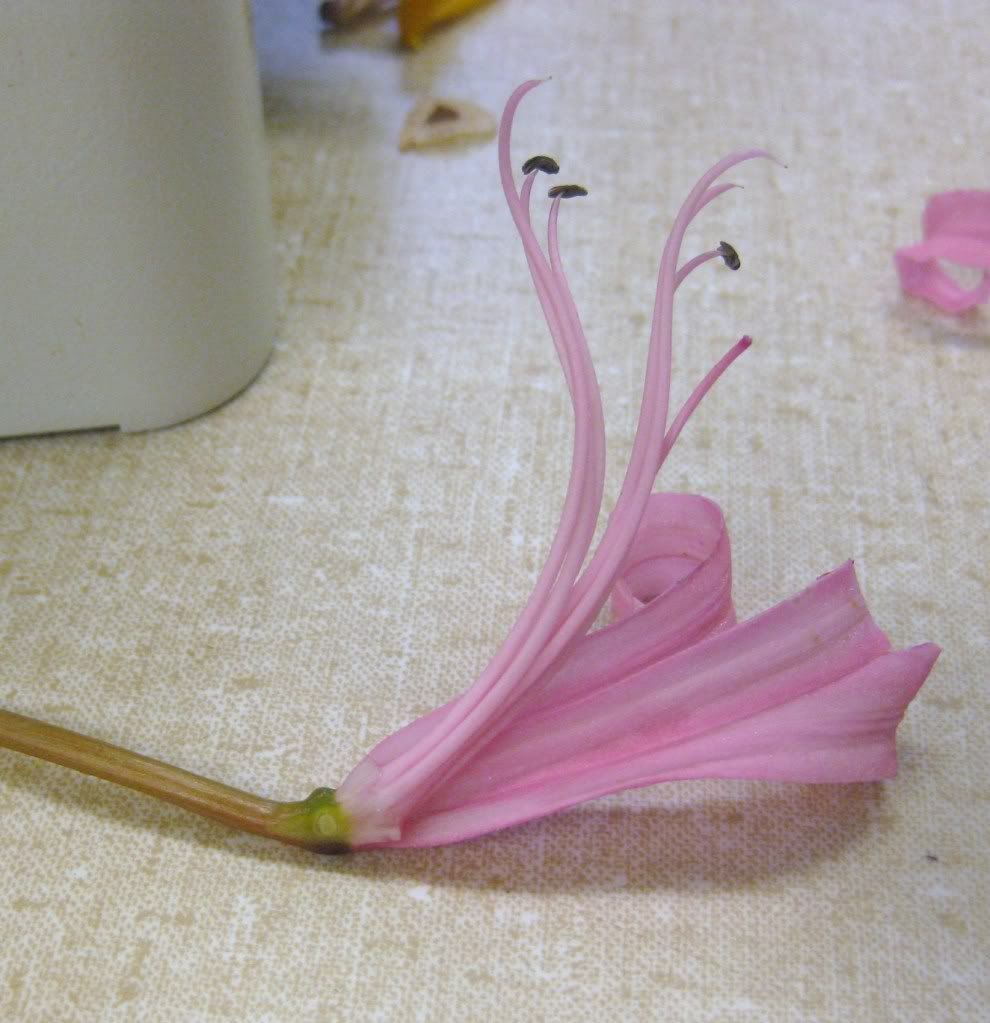
Flowers of Asparagales have inferior ovaries. Upon closer inspection the stamens and tepals, in the above picture, are attached above the ovary.
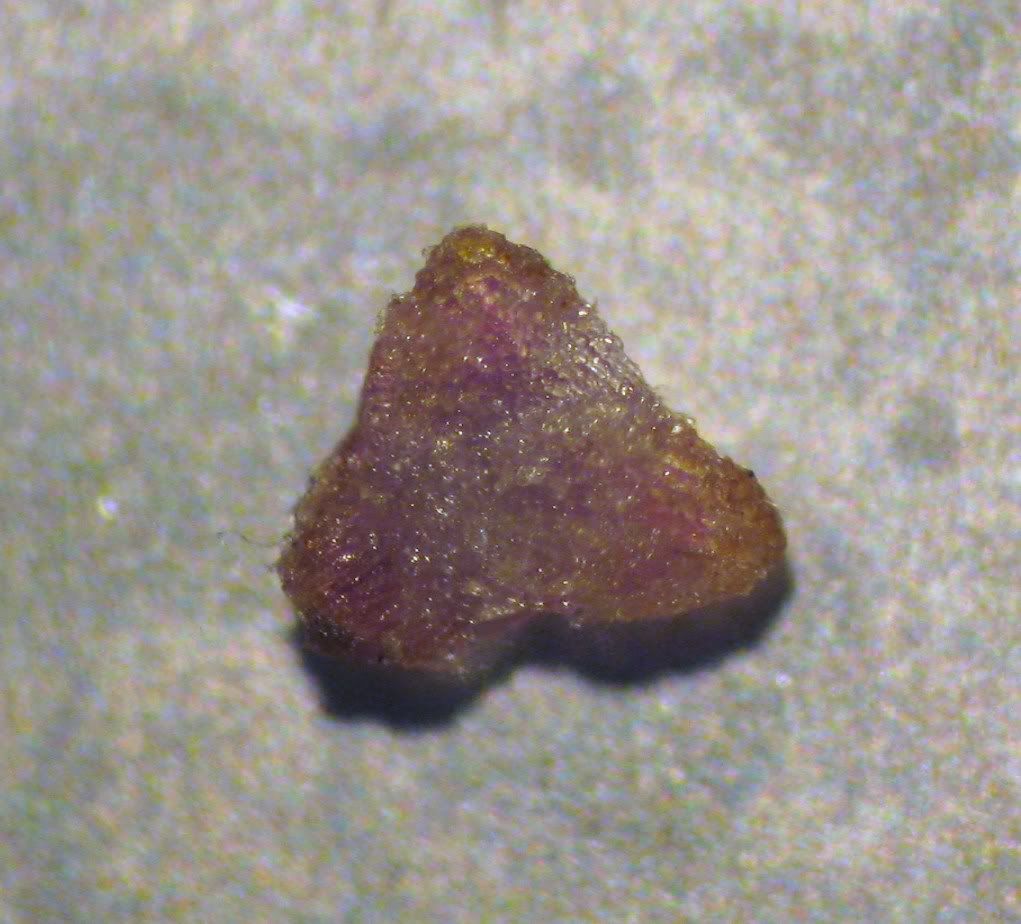
The stigma has 3 lobes (multiple of 3), which suggests a 3 carpel ovary.
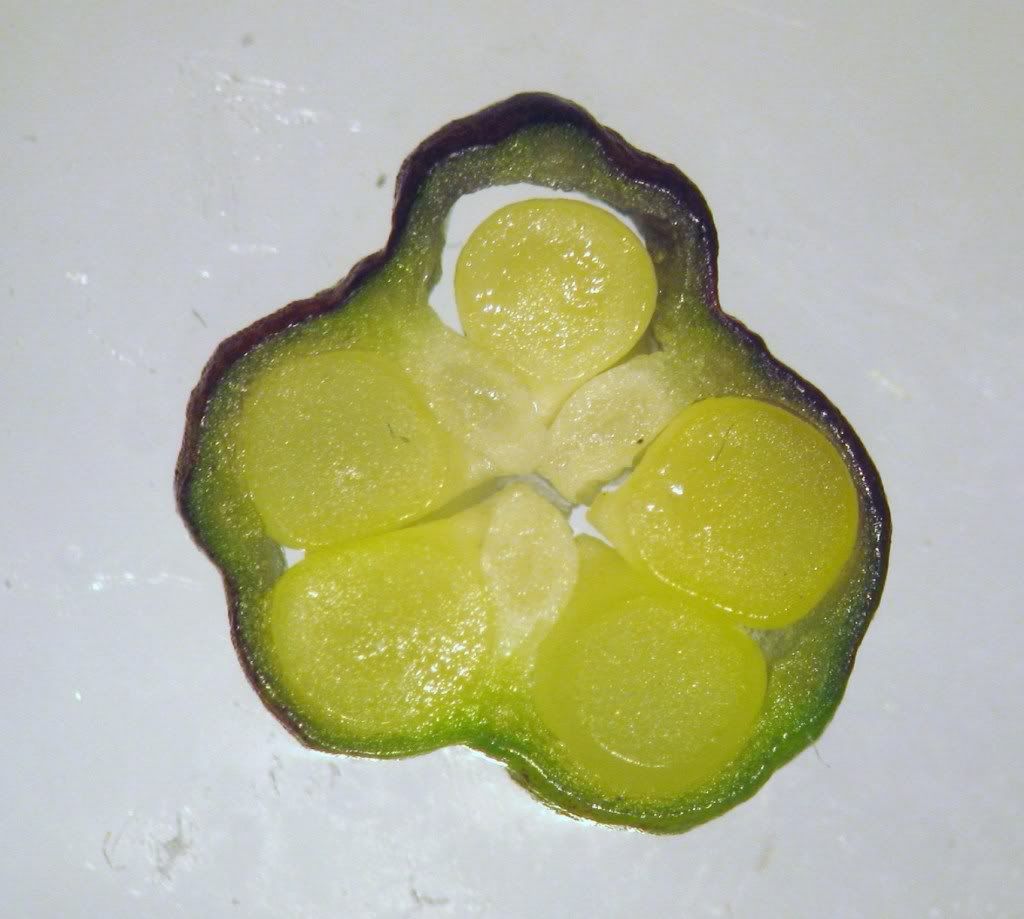
The Nerine sp. ovary does indeed have 3 carpels in axile placentation. The 5 round structures are the ovules. This cross-section only caught 5 of the many ovules that were within the ovary.

Umbels of Nerine sp. flowers with bracts (wilted) at their bases.

Another umbel (Agapanthus sp.) from Asparagales.
Bonus family: Alliaceae (onion family)

A corm that was on display. The white tissue is actually derived from the stem.

Here a bulb of an onion. The fleshy onion 'petals' are actually leaves.
IRIDACEAE - Iris family
---
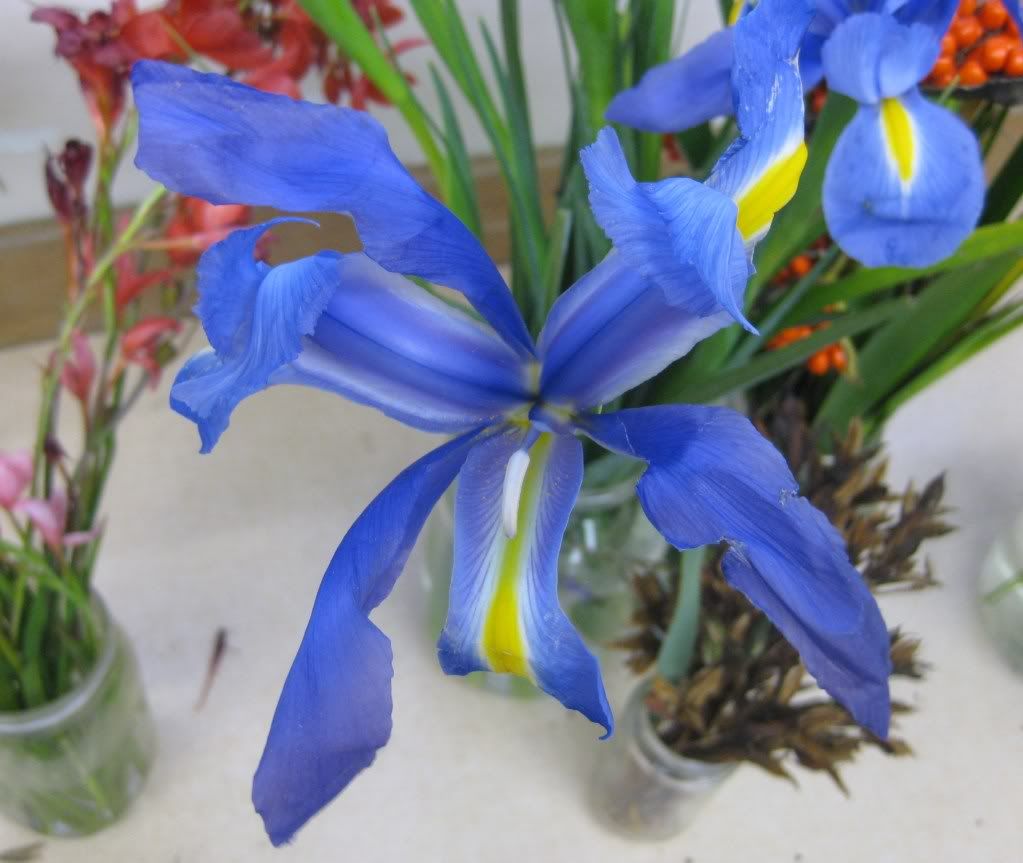
Iris sp.
 The folded over, equitant, leaves of the Iris family.


We know this flower (Hesperantha sp.) is monocot because it's floral parts are in 3s. i.e. the 3 lobed stigma, 3 stamens (one lost to the sectioning) and 6 tepals.
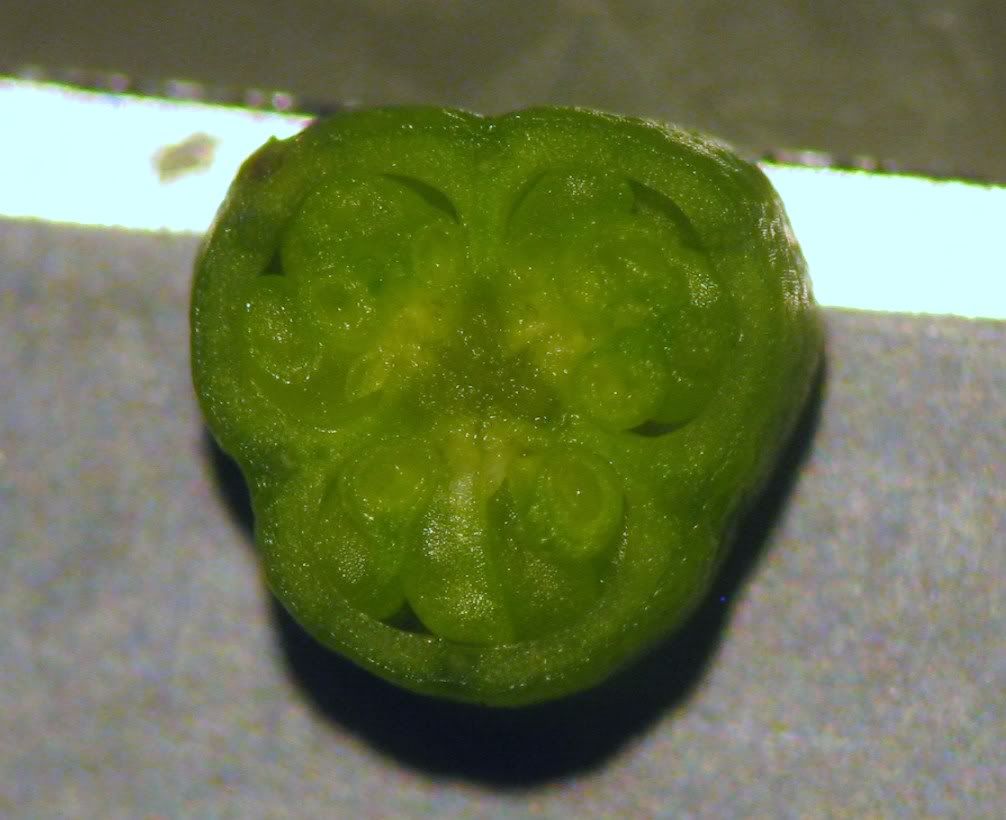
A cross section through the ovary of the above flower. This ovary has 3 carpels with multiple ovules and an axile placentation.
